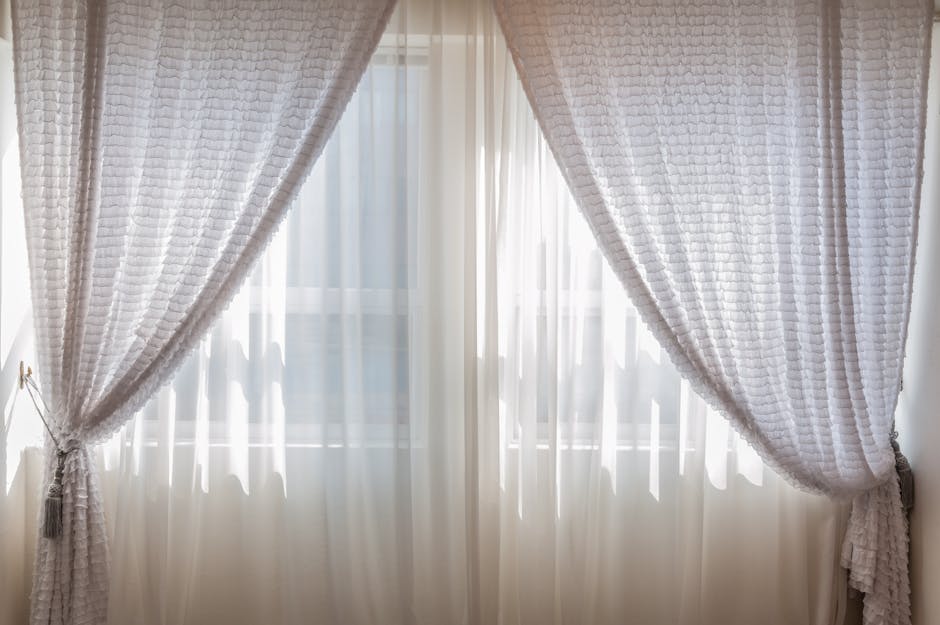
Photo: Pixabay / Pexels
Found this helpful? Share it!
Our team curates stylish, well-reviewed home decor and interior products so you don't have to. Every recommendation is based on real research: customer reviews, expert opinions, and value for money. Learn more about us →
When evaluating Sheer Curtains With Blackout Liner (2026), the key factors to consider are build quality, long-term durability, and whether it genuinely solves the problem it claims to address.
Between the equinox on September 22 and the end of daylight saving time on November 2, most of the country loses roughly two hours of usable evening light — and suddenly the curtains that worked all summer are either letting in harsh low-angle sun at 7 a.m. or making your living room feel like a cave by 5 p.m. That's exactly why layered sheer-plus-blackout curtain sets are moving fast right now: they're the only window treatment that solves both problems at once, without swapping panels every season.
As the sun's arc drops, light stops coming through the top of your windows and starts blasting in horizontally. That's why your morning coffee spot suddenly has glare it didn't have in July, and why your TV is unwatchable at 4 p.m. A sheer layer diffuses that low-angle light into soft ambient glow; the blackout liner behind it kills it completely when you need to. Single-layer panels force you to pick one.
Windows account for a significant share of household heat loss, and a lined curtain creates an insulating air pocket between the glass and your room. Homeowners are buying now, before the first real cold snap, because installing thermal-lined drapery in September pays for itself across the whole heating season. Wait until November and you've already lost the savings.
Thanksgiving is roughly eight weeks out, and layered drapery is the single fastest visual upgrade to a living or dining room — it adds height, softness, and a "finished" look for a fraction of what new furniture costs. Popular colorways (ivory, greige, warm white, sage) sell out through October as people stage their homes for guests. Shipping windows also tighten sharply after mid-November.
These are not the same thing. "Room darkening" typically blocks 80–90% of light; true blackout uses a triple-weave or coated backing and blocks 95–100%. If the product page doesn't state a percentage, assume it's room darkening. For bedrooms and nurseries, insist on triple-weave. For living rooms, room darkening is often plenty and drapes more softly.
Check whether a double rod is included — many "sets" are panels only.
For proper fullness, the combined panel width should be 2 to 2.5× your window width. Mount the rod 4–6 inches above the window frame and extend it 6–10 inches past each side — this makes ceilings look taller and prevents the light gaps that ruin blackout performance. For length, "puddle" is 1–3 inches past the floor; "kiss" is exactly to the floor; anything shorter reads as unfinished.
Grommet tops slide easily and give clean, even waves — best for panels you open and close daily. Pinch pleat and back-tab give a more custom, tailored look. Rod pocket is the most casual and hardest to slide. On fabric: look for a sheer in the 40–60 GSM range (voile or linen-blend) and a liner around 200+ GSM. Too-light liners wrinkle permanently and hang limp; too-heavy sheers defeat the purpose.
For most homes this fall, a two-layer sheer curtain layering set with a grommet or back-tab sheer paired with a triple-weave blackout panel is the sweet spot — it handles the low autumn sun, adds real thermal insulation before winter, and looks intentional enough for holiday guests. Prioritize sets that include both layers in matched dimensions so you're not hunting for a coordinating liner in October.
→ Shop sheer curtain layering sets on Amazon
Buying tip: order one extra panel beyond what the width calculator suggests. Fullness is the difference between "custom drapery" and "hotel room," and returns get slower as we head into peak season.
If sunrise is waking you earlier than you'd like, or streetlights and headlights cut through your current panels, a true blackout liner is non-negotiable. The sheer layer means you don't have to live in the dark all day to sleep well at night — pull the sheer only during the day, close both at bedtime.
Layered drapery is the highest-impact, lowest-commitment upgrade available. No paint, no hardware beyond a rod, and it all comes with you when you move. Hang it high and wide and a basic apartment window instantly reads custom.
If you have older single-pane windows, drafty sliders, or a north-facing room that's always cold, a thermal blackout liner meaningfully reduces heat transfer. Install in September, keep them closed on winter nights, and you'll feel the difference in the room before you see it on the bill.
Only if you want to operate the layers independently — which most people do. Some sets use attached liners on a single rod, which is simpler to install but means the sheer moves whenever the blackout does. If you're buying a two-panel-type set, budget for a double rod (they're inexpensive) and check that your wall or window frame has enough clearance for the bracket depth, usually 5–6 inches.
Yes, meaningfully — lined drapery traps a layer of still air against the window and slows heat loss, especially on older or single-pane glass. To maximize it, mount the rod close to the wall, extend panels past the window frame on both sides, and let them reach the floor so warm air can't circulate behind them. Close them at dusk and open them on sunny days to capture free solar heat.
The sheer goes in front (room side), the blackout goes behind (window side). This lets the sheer soften and diffuse light during the day, keeps the sheer looking clean and airy from inside, and presents a uniform neutral backing to the street. It also protects the blackout fabric from direct UV, which extends its life.
Every week from here, you lose more evening light and gain more of that harsh low morning sun — and the best colorways and standard lengths thin out fast as fall decorating and holiday prep collide in October. Measure your windows tonight (width × 2 to 2.5, rod 4–6 inches above the frame), then grab a set while sizing is still in stock.
Browse sheer curtain layering sets on Amazon →
As an Amazon Associate I earn from qualifying purchases.
← Back to All Reviews| Retailer | Price Range | Shipping | Link |
|---|---|---|---|
| Amazon | Check Current Price | Free (Prime) | View on Amazon → |
| Walmart | Check Site | Free over $35 | Search → |
| Target | Check Site | Free over $35 | Search → |
Prices may vary. Click through to each retailer for current pricing.
Yes, blackout liners are designed to block 99-100% of sunlight and UV rays, providing complete darkness even during the day. The sheer front layer allows filtered light when the curtains are open, while the blackout backing ensures total light blocking when closed.
Most sheer curtains with blackout liners can be hand-washed or dry-cleaned, but machine washing is not recommended as it can damage the blackout coating. Always check the manufacturer's care instructions, as some liners are specifically labeled as non-washable and should only be spot-cleaned.
Blackout liners do add weight to sheer curtains, so you'll need a sturdy curtain rod rated for heavier fabrics. The added weight is manageable for standard windows, but for large or floor-to-ceiling curtains, ensure your hardware can support the extra load.
The blackout liner is typically hidden behind the sheer fabric and won't be visible from the street during the day, maintaining your home's aesthetic from the exterior. However, at night when interior lights are on, the white or light-colored backing may be slightly visible from outside.