By Best Home Decor Picks Daily • July 20, 2026 • Contains affiliate links
Affiliate Disclosure: As an Amazon Associate, we earn from qualifying purchases. Clicking our links costs you nothing extra and helps us keep reviewing products for free.
Your living room curtains control far more than aesthetics—they manage light entry, regulate temperature, set privacy levels, and influence your energy bills. Yet most homeowners face genuine confusion: Does full blackout (95-99% light blocking) make sense, or will room darkening fabric at 80-95% work better? Should you prioritize thermal insulation with an R-value of 4.0+, or does that sacrifice too much natural light? Where do sheer curtains fit into a functional living room?
Check the fabric weight and lining composition when comparing options, as blackout curtains typically use heavy multi-layer materials that block 99% of light but may feel stiff, while room-darkening curtains offer a lighter feel with 95% light blockage and better drapeability for living rooms where aesthetics matter equally to function. Consider your climate zone when evaluating thermal curtains, since their insulating benefits are most cost-effective in regions with extreme temperatures, whereas sheer curtains work best as layering pieces in mild climates or paired with blackout liners for flexible light control.
The right answer depends entirely on your specific priorities and use case. A shift worker needing daytime sleep has completely different requirements than someone balancing natural light with privacy, or a homeowner focused on cutting energy costs. This guide compares the four main living room curtain categories head-to-head—covering actual performance differences, where each excels, where it falls short, and the trade-offs you're really making.
Blackout Curtains (95-99% Light Blocking)
True blackout curtains use multi-ply weaves and dedicated blackout linings to block nearly all light. NICETOWN Thermal Insulated Blackout Curtains, for example, feature triple-weave fabric that blocks 99% of light with a brushed, linen-like texture that avoids the institutional heavy-drape appearance. The triple-weave construction is engineered specifically to block light rather than simply absorb it, and available width options prevent light-creeping gaps at edges—a common failure point with undersized blackout curtains.
These come in neutral tones (charcoal gray, beige) and are available in multiple widths for full coverage. You're getting both light control and thermal insulation as a bonus benefit, though light blocking is the primary function.
Best for: Media rooms, shift workers, anyone needing complete daytime light control and maximum privacy. Also ideal if you want thermal benefits without committing to insulation-first curtains.
Room Darkening Curtains (80-95% Light Blocking)
Room darkening curtains offer a practical middle ground, blocking most but not all light while maintaining a livable, non-cave-like atmosphere during daytime hours. Typically constructed with a minimum of 200 GSM (grams per square meter) fabric density, they often include thermal insulation properties for temperature regulation without sacrificing the ability to see some natural light.
This category provides flexibility for spaces with multiple uses—you can dim afternoon glare for TV watching but still maintain some daytime visibility and connection to outdoor light. They work well with full-length coverage and overlapping panels at the sides for maximum effectiveness.
Best for: Living rooms used for multiple purposes, homeowners who want privacy without eliminating all natural light, those balancing energy efficiency with daytime functionality.
Thermal insulated curtains prioritize energy efficiency, featuring high-quality thermal linings with R-values of 4.0 or higher—measurable heat resistance that directly reduces energy costs year-round. NICETOWN Thermal Insulated models with R-value 4.0+ combine a blackout weave, thermal backing, and face fabric in multi-layer construction that traps heat in winter and deflects solar heat in summer.
The critical advantage is the R-value specification: an R-value of 4.0+ means the curtain genuinely resists heat transfer quantifiably. They come in neutral colors (cream, gray, charcoal, soft taupe) designed to integrate with existing décor while maintaining a lightweight aesthetic despite the thermal backing—crucial for living rooms where heavy, oppressive-looking drapes would dominate the space.
Best for: Energy-conscious homeowners, living rooms with temperature fluctuations, spaces with large windows, and those wanting measurable heating/cooling cost reduction.
Sheer Curtains (Soft Light Filtering)
Sheer curtains prioritize elegance and soft light filtering over functional light blocking or thermal control. They allow natural light to pass through while diffusing it to reduce direct glare and provide subtle privacy—you can see out, but passersby cannot see in clearly.
Sheers work best as part of a layered window treatment, paired with blackout or thermal curtains behind them for nights and high-privacy situations. They set a room's visual tone without the heavy, enclosed feeling of full blackout or thermal options.
Best for: Living rooms prioritizing natural light and visual elegance, spaces where daytime brightness is desired, and layered window treatments where sheers work with heavier curtains.
Pros & Cons
Pros
✓ Blackout curtains deliver near-total light control (99%) for daytime sleeping, movie watching, and shift-work schedules.
✓ Room darkening curtains (80-95% blocking) balance privacy with natural light, making them versatile for multi-use living rooms.
✓ Thermal insulated curtains with R-value 4.0+ provide quantifiable energy savings year-round, directly reducing heating and cooling costs.
✓ Sheer curtains add visual elegance and soft filtering without darkening the room, ideal for spaces where natural light matters.
Cons
✗ Blackout and thermal curtains feel heavy and cave-like during daytime, eliminating natural light connection—a genuine trade-off for privacy.
✗ Thermal curtains with high R-values cost more upfront and require full-length, ceiling-to-floor installation with overlapping panels to work effectively.
Our Verdict
For complete daytime light control: Blackout curtains win. NICETOWN's triple-weave construction at 99% light blocking genuinely prevents light creep, and the linen-like texture avoids that institutional appearance. If you also want thermal insulation as a bonus, their thermal-insulated blackout option delivers both.
For energy savings with flexibility: Thermal insulated curtains with R-value 4.0+ are your best investment. They reduce heating and cooling costs measurably year-round, work for multiple seasons, and maintain a more refined appearance than pure blackouts—but they require proper installation (full-length, overlapping panels) to perform effectively.
For balanced living rooms: Room darkening curtains (80-95% blocking) are the practical compromise. You get genuine privacy, afternoon glare reduction, and often thermal properties, without sacrificing all daytime light. They work for spaces that serve multiple purposes—work-from-home, movie watching, relaxation, all without feeling like a cave.
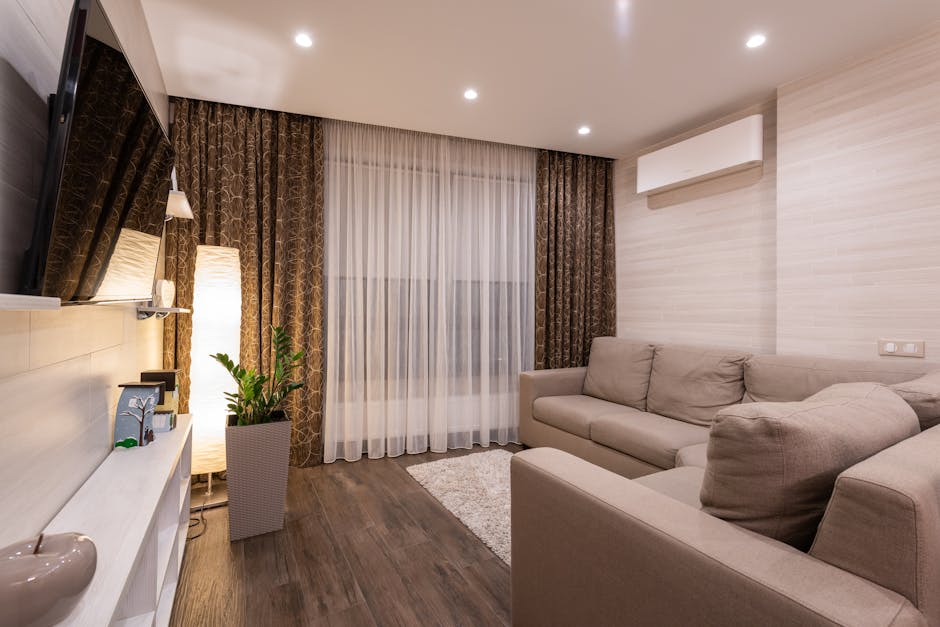
For visual elegance with natural light: Sheer curtains succeed alone only if privacy is secondary. They shine as the top layer in a two-curtain system—sheers during the day for light and aesthetics, thermal or blackout curtains behind them for night privacy and temperature control.
The honest answer: Most living rooms benefit from layered window treatments. Sheers or room darkening curtains for daytime functionality, with thermal or blackout options behind them for night and high-privacy needs. That flexibility costs more upfront but gives you genuine control over light, temperature, and mood.
Frequently Asked Questions
What's the real difference between blackout and room darkening curtains?
Blackout curtains block 95-99% of light using multi-ply weaves (like NICETOWN's triple-weave), creating near-total darkness for daytime sleeping or movie watching. Room darkening curtains block 80-95%, allowing some natural light through while still providing privacy and glare reduction. Room darkening works better for multi-purpose living rooms; blackout is better if you need reliable darkness regardless of daytime.
Are thermal curtains worth the extra cost?
Yes, if your living room has large windows or temperature swings. An R-value of 4.0+ means quantifiable heat resistance—thermal curtains directly reduce heating and cooling costs year-round. They work best with full-length, ceiling-to-floor installation and overlapping panels. For small windows or mild climates, the energy savings may take longer to recoup the higher upfront cost.
Can sheer curtains work alone in a living room?
Only if privacy is not a priority. Sheer curtains diffuse light beautifully and provide soft filtering, but they don't block light or provide meaningful daytime privacy. They're best as the top layer in a two-curtain system, paired with blackout or thermal curtains behind them for flexibility—sheers during the day, heavier curtains at night.
How do I prevent light from leaking around blackout curtain edges?
NICETOWN and similar quality blackout curtains address this with multiple width options for full coverage without gaps. Install curtains ceiling-to-floor and use overlapping panels on both sides of the window. Even the best triple-weave blackout curtains fail if edges don't fully cover the window frame.
What's GSM and why does it matter for room darkening curtains?
GSM (grams per square meter) measures fabric density and weight. Room darkening curtains typically require a minimum of 200 GSM to block 80-95% of light effectively. Higher GSM generally means better light blocking, but also heavier fabric—a trade-off between function and visual weight.
Our team curates stylish, well-reviewed home decor and interior products so you don't have to. Every recommendation is based on real research: customer reviews, expert opinions, and value for money. Learn more about us →
This post contains affiliate links. We may earn a commission if you purchase through our links at no extra cost to you.