By Best Home Decor Picks Daily • July 20, 2026 • Contains affiliate links
Affiliate Disclosure: As an Amazon Associate, we earn from qualifying purchases. Clicking our links costs you nothing extra and helps us keep reviewing products for free.
Curtains are far more than decoration—they're functional tools that control light, privacy, and ambiance. But sheer and blackout curtains solve completely different problems, and choosing between them depends on your room's purpose, size, and natural light exposure.
For smaller rooms or spaces that need to feel more open, sheer curtains allow light to filter through while maintaining privacy, whereas blackout curtains work best in larger rooms where you can afford to sacrifice some natural light for temperature control and complete darkness when needed.
This guide compares these two fundamentally different curtain types side by side, examining fabric density, opacity ratings, weight, installation needs, and real-world performance across small bedrooms, large living rooms, north-facing offices, and nurseries. By the end, you'll know exactly which type—or combination—works for your space.
Sheer Curtains (1–15% Opacity)
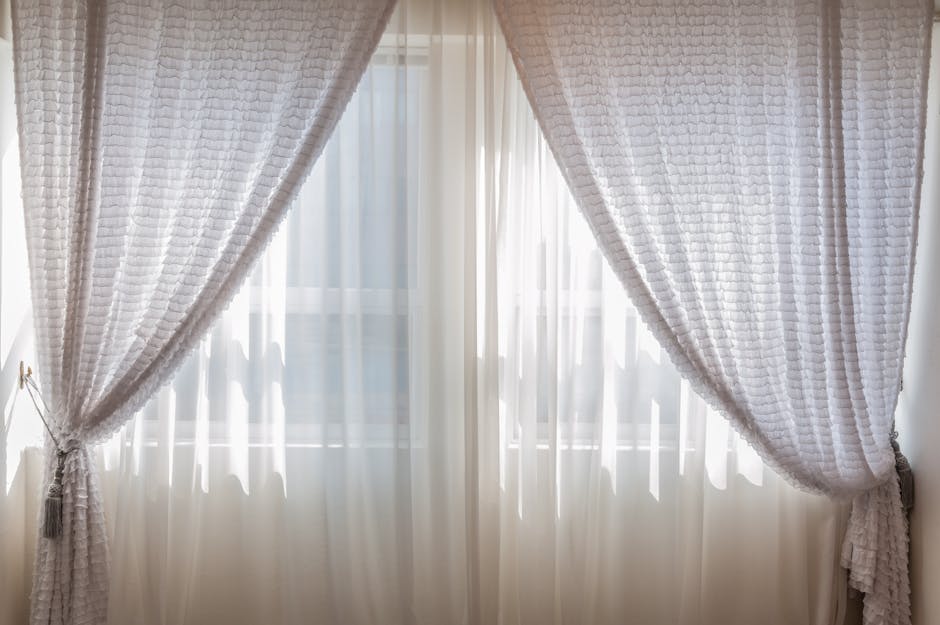
Sheer curtains feature lightweight fabrics with loose weaves that allow most natural light to pass through while softening its intensity. Opacity ranges from 1–5% for maximum light transmission in north-facing rooms to 5–15% for semi-sheer privacy options. Fabric weight typically falls under 3 oz per yard for small, intimate spaces, or 3–5 oz for larger rooms where you want better drape without a limp appearance.
Sheers excel at diffusing harsh sunlight and creating an elegant, airy aesthetic. They're ideal when you want privacy from direct eye contact without sacrificing daylight—think living rooms, dining areas, and bedrooms where you don't need complete darkness.
Best for: Living rooms, dining areas, bedrooms with daytime use, north-facing windows, and spaces where you want soft ambient light combined with modest privacy.
Blackout Curtains (99–100% Opacity)
Blackout curtains use dense, tightly woven fabrics engineered to block 99–100% of light. This isn't just about darkness—complete opacity prevents light leakage at the edges, which requires precise installation: panels must extend 8–12 inches beyond the window frame on small windows, or 12–15 inches on larger windows and glass doors. Ceiling-mounted rods work better than traditional mounts for maximum coverage, especially in rooms with sloped ceilings.
These curtains are non-negotiable for sleep quality, focus, and temperature control. A 100% opacity option is standard for master bedrooms and nurseries, while 99% opacity with layering provides flexibility in home offices where you might want some ambient light during work hours while still having blackout capability at night.
Best for: Master bedrooms, nurseries, home offices, media rooms, shift workers, and any space where sleep quality or light-sensitive work is a priority.
Layered Approach (Sheers + Blackout Combination)
Many homeowners achieve the best of both worlds by pairing lightweight sheers on the inside with blackout curtains on the outside layer. This allows daytime sheer filtering for aesthetics and ambient light, while maintaining complete blackout capability at night or during focus hours. The dual-layer approach also improves insulation and thermal control.
This strategy works exceptionally well in multipurpose rooms like home offices that serve as guest bedrooms, or in master bedrooms where you want soft morning light but complete darkness for sleep. The flexibility justifies the additional cost and installation complexity for many households.
Best for: Master bedrooms needing flexibility, home offices with daytime work and nighttime sleep, guest rooms, nurseries, and any room where lighting needs change throughout the day.
Pros & Cons
Pros
✓ Sheer curtains (1–5% opacity) maximize natural light in north-facing rooms and create an elegant, airy aesthetic without sacrificing basic privacy.
✓ Blackout curtains (100% opacity) eliminate light leakage when properly installed with 8–15 inch side overlap, delivering measurable improvements in sleep quality and work focus.
✓ Medium-weight sheers (3–5 oz) drape professionally in larger rooms without looking limp, while lightweight sheers (under 3 oz) enhance intimate spaces with gentle light diffusion.
✓ Blackout curtains with ceiling-mounted installation extend visual room height and prevent edge light leaks that floor-to-ceiling traditional mounts can't eliminate.
✓ Layering sheers with blackout curtains provides genuine daytime-to-nighttime flexibility at minimal additional cost compared to buying two separate curtain sets.
Cons
✗ Sheer curtains provide almost no privacy at night when interior lights are on—they're strictly for daytime light diffusion and aesthetic softening.
✗ Blackout curtains require precise width calculations (8–15 inch overlap per side) and ceiling-mounted installation to prevent light leakage; improper installation defeats their purpose.
✗ Lightweight sheers (under 3 oz) can look tired and dated in large rooms without the structure that medium-weight fabrics provide.
✗ 100% opacity blackout fabrics block all natural light, making them unsuitable for rooms where you want any daytime ambient light without artificial lighting.
✗ Layering sheers and blackout curtains doubles upfront cost and requires twice the rod space and installation labor compared to a single curtain type.
Our Verdict
Choose sheer curtains if your room gets abundant natural light and your primary goals are aesthetics, subtle privacy, and soft light diffusion. Semi-sheer fabrics (5–15% opacity) work well in living rooms and dining areas, while very sheer fabrics (1–5%) are ideal for north-facing bedrooms where you want morning light without glare. Stick with medium-weight sheers (3–5 oz) in larger spaces to avoid a limp appearance.
Choose blackout curtains if sleep quality, work focus, or temperature control is non-negotiable. Master bedrooms and nurseries need 100% opacity; home offices can get by with 99% opacity layered under a sheer if you want daytime flexibility. Critical: measure carefully and extend panels 8–15 inches beyond your window frame, and use ceiling-mounted rods for maximum light seal.
Layer both types if your room serves multiple purposes or if you want the best of both worlds. The modest additional investment pays dividends in flexibility and comfort, especially in bedrooms that double as home offices or guest rooms. This approach transforms a single-purpose space into one that adapts to your real-life rhythm.
Bottom line: Sheers and blackout curtains aren't competitors—they solve different problems. Identify your room's primary function (rest, work, entertaining) and match the curtain type to that need. For rooms with competing demands, layering is the most practical solution.
Frequently Asked Questions
What does opacity percentage actually mean for curtains?
Opacity percentage measures how much light a fabric blocks. Sheer curtains at 1–5% opacity let 95–99% of light through with soft diffusion. Semi-sheers at 5–15% opacity block more light while maintaining some transparency. Blackout curtains at 99–100% opacity block virtually all light. The difference between 99% and 100% matters only if complete darkness is critical; 99% is fine for most home offices, while 100% is standard for bedrooms and nurseries.
Why do blackout curtains need such wide overlap beyond the window frame?
Light leaks around the edges of curtains, not through the fabric itself. An 8–15 inch overlap (depending on window size) ensures panels meet in the center or extend past the frame entirely, blocking side leakage. Without proper overlap, even 100% opacity fabric fails to deliver complete darkness. Ceiling-mounted rods amplify this effect by covering more wall area above the window.
Can I use lightweight sheer curtains in a large living room?
Not without risking a dated appearance. Lightweight sheers under 3 oz per yard droop and look limp in spacious rooms. For large living rooms and dining areas, choose medium-weight sheers (3–5 oz) that drape with structure and polish. Reserve lightweight sheers for small bedrooms and intimate spaces where delicate fabric is intentional and flattering.
Are blackout curtains too dark if I work from home during the day?
99% opacity blackout curtains with layered sheers solve this problem perfectly. Keep the sheer layer drawn during work hours for soft ambient light and privacy, then close the blackout layer at night or during video calls that require a professional background. This gives you flexibility without sacrificing sleep quality when you need it.
Do blackout curtains actually improve sleep quality?
Yes, measurably. Darkness triggers melatonin production, which regulates sleep cycles. Even small light leaks from windows, alarm clocks, and hallways disrupt sleep. Properly installed 100% opacity blackout curtains eliminate this source of disruption, leading to deeper, more consistent sleep—especially important for shift workers and light-sensitive sleepers.
Can I install blackout curtains on a ceiling-mounted rod myself?
Yes, but it requires more precision than traditional mounts. Ceiling mounts must anchor into studs or use heavy-duty anchors to support the weight of blackout fabric and panels. Measure twice and use a level to ensure rods are straight; even slight misalignment will be visible. If you're unsure, hiring a professional installation ensures the light seal works as intended.
Our team curates stylish, well-reviewed home decor and interior products so you don't have to. Every recommendation is based on real research: customer reviews, expert opinions, and value for money. Learn more about us →
This post contains affiliate links. We may earn a commission if you purchase through our links at no extra cost to you.