By Best Home Decor Picks Daily • July 21, 2026 • Contains affiliate links
Affiliate Disclosure: As an Amazon Associate, we earn from qualifying purchases. Clicking our links costs you nothing extra and helps us keep reviewing products for free.
Choosing bedroom curtains means balancing three competing demands: light control, temperature regulation, and aesthetic appeal. But the right answer depends entirely on your priorities. A sheer linen curtain creates elegance and diffused light—but won't block morning sun. Motorized smart curtains offer convenience and precise control, but cost significantly more. Blackout curtains deliver maximum privacy and darkness, while thermal-insulated options address energy efficiency alongside privacy.
Before purchasing bedroom curtains, measure your windows carefully and consider the room's primary need—blackout curtains excel for light blocking and sleep, linen offers breathable elegance but less privacy, sheer provides soft filtered light, thermal saves on energy costs, and smart motorized options require compatible smart home systems and reliable power sources. Choose based on your climate, budget, and whether you prioritize darkness, aesthetics, energy efficiency, or convenience.
This guide compares five distinct curtain types available in 2026, breaking down the real trade-offs so you can match your bedroom's needs to the right solution.
Blackout Curtains (90–100% Opacity)
Blackout curtains are engineered to block light completely, typically achieving 90–100% blackout ratings. They use dense, layered fabrics—often with a special backing that prevents virtually all light penetration. Available in neutral tones like charcoal, navy, and warm taupe, modern blackout curtains no longer look industrial or clinical; they can integrate seamlessly into contemporary bedroom design.
Installation is straightforward: they hang on standard curtain rods and require no smart home integration or complex setup.
Best for: Light sleepers, shift workers, or anyone prioritizing complete darkness and maximum privacy above all else.
Linen Curtains (150–200 GSM, 85%+ Opacity)
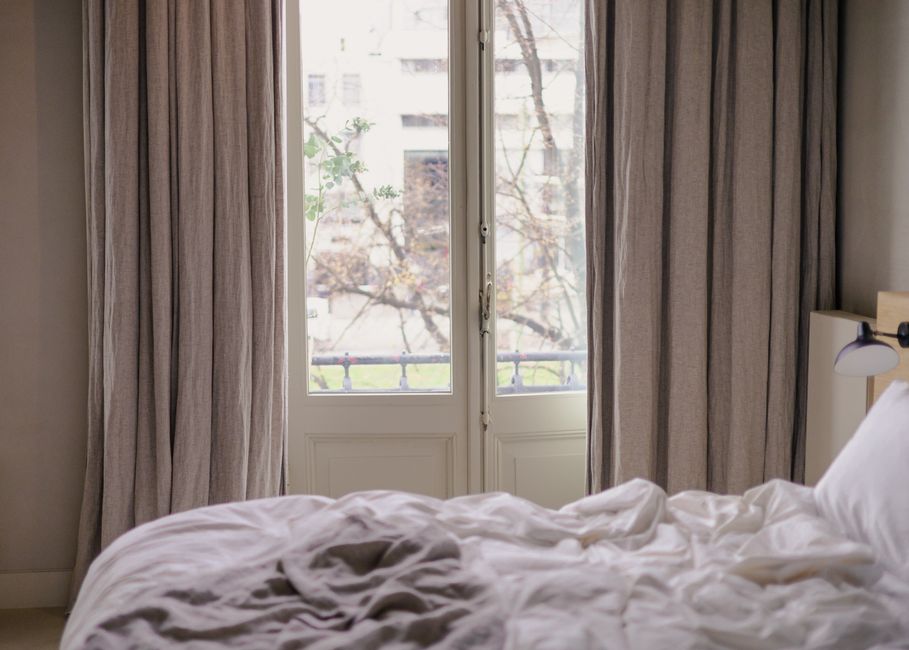
Linen curtains offer a natural, textured aesthetic while providing practical privacy through medium to heavyweight constructions (150–200 GSM). Pure linen can be translucent, so effective bedroom linen pairs combine linen-cotton blends or pure linen with blackout linings to reach 85%+ opacity. The inherent texture of the fabric adds visual interest without bold patterns, creating a sophisticated, calming look.
Neutral linen tones—ivory, warm white, natural beige, soft gray—work universally with bedroom décor and promote a relaxed sleeping environment better than bright whites.
Best for: Those seeking elegant, natural materials with solid privacy and a designer aesthetic without smart-home complexity.
Sheer Curtains (80–150 GSM with Texture)
Sheer curtains allow light diffusion while maintaining some daytime privacy—but only if chosen correctly. Lightweight voile sheers (under 80 GSM) are nearly transparent; effective bedroom sheers operate in the 80–150 GSM range with subtle jacquard weaves, linen blends, or textured cotton that obscure interior details from outside. In cream, ivory, soft gray, or pale taupe, textured sheers create a gentle light diffusion that's harder to see through than pure white options.
These work best in layered systems where sheers allow soft light during the day and a blackout or thermal layer provides privacy at night.
Best for: Bedrooms where daytime light quality and elegance matter more than complete blackout; layered with a secondary blackout panel for full privacy when needed.
Thermal Insulated Curtains (10+ oz/yard with Thermal Backing)
Thermal-insulated curtains combine a decorative front fabric with a dense thermal or blackout backing, creating multiple insulating layers. The construction reduces heat loss in winter by up to 25% while blocking summer heat gain, making them year-round performers. Heavyweight fabrics (10+ ounces per yard) provide both superior insulation and luxurious drape; lighter thermal curtains often bunch or gap at the sides, compromising both function and appearance.
They deliver complete light-blocking comparable to dedicated blackout curtains while adding energy efficiency and temperature regulation as secondary benefits.
Best for: Climate-conscious homeowners and those in regions with significant seasonal temperature swings who want privacy, darkness, and measurable energy savings.
Motorized smart curtains integrate with existing smart home systems (Alexa, Google Home, Apple HomeKit) for scheduled or app-controlled opening and closing. Quality models feature whisper-quiet motors under 30 decibels—critical for bedrooms where loud mechanical noise disrupts sleep. They typically offer 90–100% blackout capability in sleek, neutral designs (charcoal, navy, taupe) that don't appear clinical or industrial.
Setup requires electrical outlet proximity and smart home platform compatibility, but the convenience of automated morning/evening routines eliminates manual operation entirely.
Best for: Tech-forward users with existing smart home ecosystems, those seeking maximum convenience, and anyone with mobility issues who cannot easily operate manual curtains.
Pros & Cons
Pros
✓ Blackout curtains are affordable, require zero setup complexity, and deliver 90–100% light blocking for shift workers and light-sensitive sleepers
✓ Linen curtains provide timeless aesthetic appeal with practical opacity ratings (85%+) without sacrificing design elegance
✓ Thermal curtains reduce winter heat loss by up to 25% while maintaining complete light control—a measurable energy efficiency benefit
✓ Motorized smart curtains offer hands-free convenience and automation integration without daily manual operation
✓ Sheer curtains layered with blackout panels allow flexible light control—soft diffusion during the day, complete privacy at night
Cons
✗ Blackout curtains can appear heavy or overly functional if not selected in softer neutral tones; they block all natural light even when you want it
✗ Linen curtains require careful construction (blends or linings) to achieve adequate opacity; pure linen alone is often insufficient for bedroom privacy
✗ Motorized smart curtains carry significantly higher upfront costs and require electrical proximity and smart home compatibility; motors may fail over time
✗ Sheer curtains alone cannot provide adequate nighttime privacy or darkness; they require pairing with a secondary blackout layer for full bedroom function
✗ Thermal curtains are heavier and may require upgraded hardware; lightweight thermal options compromise both insulation performance and appearance
Our Verdict
The best choice depends on what you're optimizing for:
Maximum darkness and privacy on a budget: Blackout curtains in charcoal or navy win. They're affordable, require no setup, deliver 90–100% opacity, and work for any bedroom style when chosen in muted tones rather than pure black.
Natural aesthetic with solid privacy: Medium-to-heavyweight linen blends (150–200 GSM) or pure linen with blackout linings offer designer appeal and genuine 85%+ opacity. The inherent texture and warm neutrals create a more sophisticated, calming environment than synthetic-feeling blackout fabrics.
Energy efficiency plus darkness: Thermal-insulated curtains (10+ oz/yard) are the only option that measurably reduces heating and cooling costs while blocking light completely. Winter heat-loss reduction of up to 25% justifies the higher upfront cost in cold climates.
Convenience and automation: Motorized smart curtains excel for users with existing smart home systems who value hands-free operation. However, they cost 2–3× more than manual alternatives and require electrical access and platform compatibility.
Flexible light control: Layer sheer curtains (80–150 GSM with texture) with a blackout panel for the best of both worlds—soft, diffused light during the day and complete privacy at night. This requires more hardware and space but maximizes flexibility.
Start by ranking your priorities: complete darkness (blackout), design aesthetics (linen), energy savings (thermal), automation (smart motorized), or flexibility (layered sheers). The highest-priority need should drive your decision.
Frequently Asked Questions
What opacity rating do I need for bedroom privacy?
Aim for at least 85% opacity for genuine daytime privacy. Blackout curtains reach 90–100%; thermal-insulated curtains match that range; quality linen blends with backing achieve 85%+. Pure linen or standard sheers below 80 GSM will not provide adequate privacy even in daylight.
Can I layer different curtain types together?
Yes. Pairing sheer curtains (for daytime aesthetics) with blackout panels behind them is a popular approach that provides both light diffusion during the day and complete darkness at night. This requires additional hardware and rod space but maximizes flexibility.
Do motorized smart curtains work without WiFi?
Most require internet connectivity to your smart home hub (Alexa, Google Home, etc.) for app control and scheduling. Manual remote controls typically work without WiFi, but losing internet loses automation features. Confirm compatibility with your existing smart home platform before purchasing.
How much can thermal curtains actually save on heating and cooling?
Quality thermal-insulated curtains (10+ oz/yard with dense backing) reduce winter heat loss by up to 25%. Savings vary based on climate, window size, and how often curtains are closed. In regions with harsh winters, this translates to meaningful utility bill reductions that offset higher upfront costs over 3–5 years.
What's the difference between linen and linen-blend curtains for bedrooms?
Pure linen is often translucent and may not provide sufficient privacy alone; linen-cotton blends or pure linen paired with blackout linings achieve the 85%+ opacity needed for bedrooms. Blends also tend to wrinkle less and be more durable than 100% linen.
Are quiet motors on smart curtains really necessary for bedrooms?
Yes. Motors louder than 30 decibels can startle you awake or disrupt sleep, especially if you set schedules for automatic morning opening. Prioritize whisper-quiet specifications if you plan to automate curtain operation during sleeping hours.
Our team curates stylish, well-reviewed home decor and interior products so you don't have to. Every recommendation is based on real research: customer reviews, expert opinions, and value for money. Learn more about us →
This post contains affiliate links. We may earn a commission if you purchase through our links at no extra cost to you.