By Best Home Decor Picks Daily • July 20, 2026 • Contains affiliate links
Affiliate Disclosure: As an Amazon Associate, we earn from qualifying purchases. Clicking our links costs you nothing extra and helps us keep reviewing products for free.
When summer heat drives you indoors, wooden puzzle projects offer a refreshing alternative to screens. But the options aren't all identical: some emphasize mechanical complexity, others focus on meditative assembly, and some blend educational STEM learning with artistic satisfaction. Understanding these differences helps you pick the right kit for your goals and skill level.
Before purchasing a wooden puzzle kit, construction set, or mechanical model, verify the finished dimensions and display footprint since these items can range from compact desk-sized projects to large installations that require dedicated shelf or wall space in your home.
This guide compares the main categories of wooden DIY kits available today—3D puzzles, mechanical model sets, construction kits, and STEM craft bundles—based on actual product designs, assembly time, difficulty, and what builders report achieving with them.
3D Wooden Puzzles (EWA Eco-Wood-Art & similar)
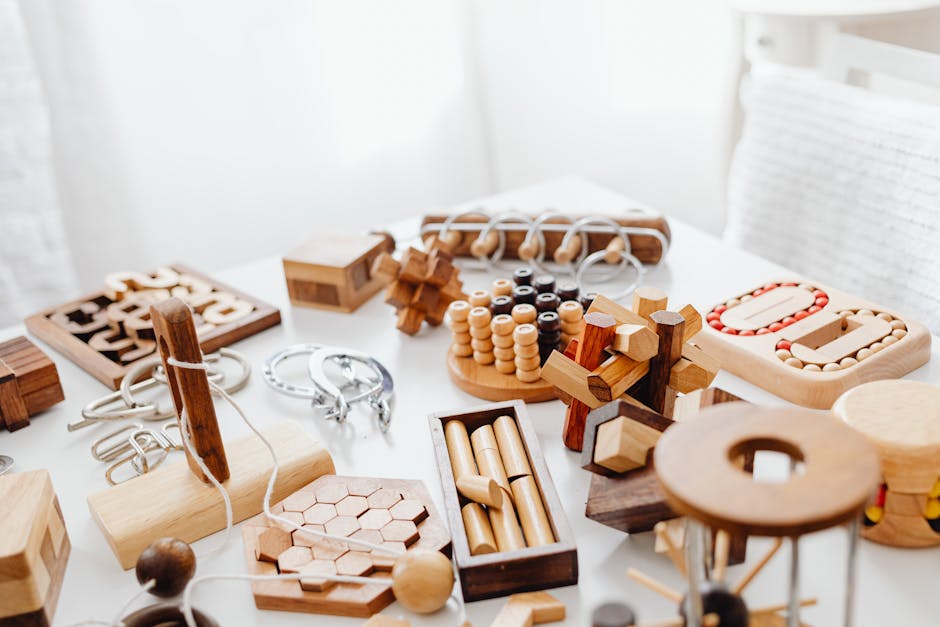
3D wooden puzzles stack individual wooden pieces into finished structures—think miniature buildings, vehicles, or decorative objects. Unlike flat jigsaw puzzles, these have depth and mechanical elements. Pieces typically interlock without glue, creating functional or displayable items. Assembly involves following step-by-step instructions and solving spatial arrangement challenges.
Best for: Adults seeking meditative, focused activities; people who want finished pieces that double as home décor; beginners wanting lower entry difficulty
Mechanical Model Kits (EWA Eco-Wood-Art & similar)
Mechanical models are engineered wooden kits where completed projects actually function—gears turn, mechanisms move, or pieces operate together. These require more spatial reasoning and patience than static puzzles. Assembly often involves aligning moving parts precisely and understanding how mechanical systems work. Building time is longer, but the reward is a working model you can interact with repeatedly.
Best for: STEM learners and hobbyists; people interested in engineering principles; builders wanting a functional end-product; intermediate to advanced puzzlers
DIY Wooden Construction Sets (modular/multi-project)
Construction sets emphasize variety and expandability. They often include multiple smaller projects or reusable components that let you build different models from one kit. These appeal to builders who want flexibility and don't commit to single long-term projects. Sets may combine elements of puzzles and models, offering both static and mechanical options depending on which project you choose from the kit.
Best for: Families wanting multiple activities from one purchase; builders who like variety; people uncertain what difficulty level they prefer; those wanting to scale projects up or down
STEM Wooden Craft Kits (educational focus)
STEM kits explicitly teach engineering, physics, or problem-solving alongside building. They often include educational materials explaining principles—how pulleys work, gear ratios, structural load-bearing—making the building process a learning experience. These typically suit younger builders or educators seeking screen-free STEM alternatives. Difficulty and assembly time vary widely depending on the specific kit.
Best for: Children and students; educators seeking hands-on learning tools; families wanting STEM enrichment during summer break; parents preferring skill-building over passive entertainment
Premium Eco-Sourced Kits (any category with sustainability focus)
Some manufacturers (like EWA Eco-Wood-Art, highlighted across source materials) emphasize sustainably sourced wood, precision craftsmanship, and longevity. These premium options cost more but deliver higher-quality materials, better instruction clarity, and pieces that hold up to repeated assembly/disassembly or long-term display. They're positioned as gift-worthy and environmentally conscious purchases.
Best for: Eco-conscious buyers; people seeking gift-quality items; builders who value craftsmanship and material quality over budget; those planning to display finished work
Pros & Cons
Pros
✓ Screen-free engagement that uses multiple senses and reduces eye strain compared to digital entertainment
✓ Finished projects transform into decorative pieces, desk art, or functional models—genuine output, not discarded waste
✓ Suitable across ages: children develop fine motor skills while adults find meditative, stress-relieving focus
✓ No special tools required for assembly (most kits include what you need); instructions are visual and accessible to beginners
✓ Eco-friendly wood materials (when sourced responsibly) are less wasteful than plastic puzzle alternatives
Cons
✗ Assembly time varies dramatically (2–20+ hours depending on kit complexity); some projects require sustained attention across multiple sessions
✗ Instruction clarity and piece fit quality vary significantly between brands; budget kits may have unclear diagrams or misaligned parts
✗ Higher-quality kits carry premium pricing; entry cost is steeper than traditional flat puzzles or digital entertainment subscriptions
Our Verdict
The best choice depends on your specific goals. If you want a relaxing afternoon activity that becomes instant décor, a 3D puzzle kit suits you. If you're interested in how things work and want a functional end-product, a mechanical model kit rewards that curiosity. For families wanting flexibility and multiple projects from one purchase, construction sets offer better value. STEM-focused kits work best when learning is the explicit goal, not an afterthought. And across all categories, premium eco-sourced options (like EWA Eco-Wood-Art models mentioned throughout the source material) deliver superior materials and craftsmanship—worth the extra cost if gift-quality output or long-term display matters to you.
Quality varies within each category. Rather than assuming all wooden kits are equal, check specific product reviews for instruction clarity, piece fit precision, and whether assembly time estimates match user reports. A $25 budget 3D puzzle and a $60 premium mechanical model offer different experiences even if both are called 'wooden kits.'
Frequently Asked Questions
How long does a typical wooden puzzle kit actually take to complete?
This varies widely by kit and skill level. Simple 3D puzzles may take 2–4 hours; mechanical models often require 8–20 hours across multiple sessions. Instruction time estimates in product descriptions are sometimes optimistic—actual time usually runs 20–30% longer for first-time builders. STEM kits and construction sets vary based on which project you choose within the package.
Do I need special tools to assemble these kits?
Most wooden puzzle kits require no special tools beyond what's included: a screwdriver (sometimes), sandpaper for rough edges, and potentially wood glue for finishing (not always necessary). Some premium kits include everything. Metal tools aren't usually needed. Budget kits sometimes have quality issues requiring a utility knife or file, but this is a sign of lower quality, not a feature.
Are wooden puzzle kits really eco-friendly compared to plastic alternatives?
It depends on sourcing and manufacturing. Wood from sustainably managed forests is genuinely less resource-intensive than injection-molded plastic. However, not all wooden kits are responsibly sourced—check product descriptions and certifications. Premium brands like EWA Eco-Wood-Art explicitly highlight sustainable sourcing; budget kits may not. Shipping impact also matters: heavy wooden kits have a larger carbon footprint than lightweight plastic puzzles.
Can I actually display completed wooden puzzles as room décor?
Yes, and this is a genuine advantage over flat jigsaw puzzles. Completed 3D puzzles, mechanical models, and construction projects have depth, visual interest, and often functional appeal (moving gears, articulating parts). They work as shelf décor, desk displays, or conversation pieces. However, dust collects on intricate pieces—plan for occasional light cleaning.
Which option is best for beginners versus experienced builders?
Beginners should start with 3D puzzles (simpler spatial reasoning, 2–4 hour commitment, forgiving assembly) or beginner-level STEM kits. Intermediate builders can handle mechanical models and multi-project construction sets. Advanced builders and engineers benefit most from complex mechanical kits with multiple working systems. Difficulty within each category varies; don't assume all 'mechanical models' are equally challenging.
Do mechanical models actually work, or is that marketing?
Quality mechanical models genuinely function when assembled correctly—gears turn, pulleys move, mechanisms operate. However, build quality and instruction clarity determine whether yours will work. Cheap mechanical kits may have misaligned parts that prevent movement; premium kits are engineered for actual function. If mechanical performance matters to you, prioritize higher-quality brands and check user reviews for specific models.
Can wooden puzzle kits be a meaningful gift?
Yes, especially premium eco-sourced options. They're gift-worthy because they're tactile, result in display-quality finished projects, and feel thoughtful compared to mass-produced items. Budget kits feel more utilitarian; premium kits arrive in nice packaging and signal genuine consideration. Pair with a note about why you chose this specific kit based on the recipient's interests (STEM learning, relaxation, décor, etc.).
Our team curates stylish, well-reviewed home decor and interior products so you don't have to. Every recommendation is based on real research: customer reviews, expert opinions, and value for money. Learn more about us →
This post contains affiliate links. We may earn a commission if you purchase through our links at no extra cost to you.