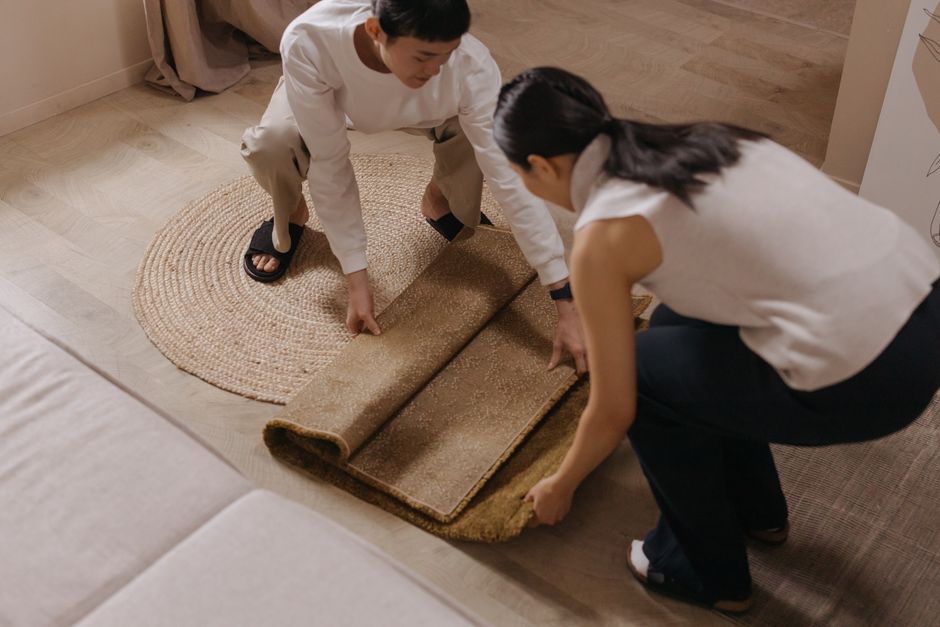
Photo: cottonbro studio / Pexels
Found this helpful? Share it!
Our team curates stylish, well-reviewed home decor and interior products so you don't have to. Every recommendation is based on real research: customer reviews, expert opinions, and value for money. Learn more about us →
When evaluating What Size Rug Do I Need For A Living Room (2026), the key factors to consider are build quality, long-term durability, and whether it genuinely solves the problem it claims to address.
For most living rooms, an 8x10 area rug is the right size — it's large enough to anchor a standard sofa and two accent chairs while leaving a clean border of exposed flooring. If your room is smaller than 12x12 feet, size down to a 5x8; if it's larger than 14x18 feet, go up to a 9x12 or 10x14.
The rule that works in nearly every living room: your rug should be large enough that at minimum the front legs of every major seating piece rest on it. For a typical 12x15-foot living room with a sofa, coffee table, and a pair of chairs, that means an 8x10. You want 18 to 24 inches of bare floor showing between the rug's edge and the walls — enough to frame the space without making the rug look like it's floating. When you're genuinely torn between two sizes, choose the larger one. Undersized rugs are the single most common decorating mistake in American homes.
Rug sizing isn't really about the room's square footage — it's about the furniture arrangement sitting on top of it. A rug's job is to visually group your seating into one cohesive conversation area. When it's too small, it does the opposite: it fragments the room and makes everything around it look disconnected and unintentional.
There are three standard approaches, and each one calls for a different size:
To size correctly, measure your seating arrangement — not your room. Measure from the outer edge of your sofa to the outer edge of the furniture across from it, and from one side of the arrangement to the other. Then add 12 to 24 inches in each direction. That number is your target rug size, rounded to the nearest standard dimension.
Here's a quick reference by room size:
A few situational adjustments: if your sofa is against a wall, the rug should still extend at least 6 inches beyond each end of the sofa horizontally. If you have a sectional, measure the full L-shape footprint — sectionals almost always demand a 9x12 or larger. And in open-concept spaces, the rug defines where the living room "ends," so err generous.
Interior designers are nearly unanimous on this point: the most frequent sizing error is going too small, and it's usually driven by price. A 5x8 costs meaningfully less than an 8x10, and shoppers talk themselves into the smaller size. The result is what designers call a "postage stamp" rug — a small rectangle stranded under a coffee table that makes an otherwise well-furnished room feel cheap and unfinished.
Designers also emphasize that a properly sized rug makes a room feel larger, not smaller. This is counterintuitive to most homeowners, who assume a big rug will crowd a small space. In practice, a generous rug creates a single unbroken visual plane, while a small rug chops the floor into competing sections and shrinks the room perceptually.
One more expert consensus: the rug should relate to the furniture, not the walls. A rug centered to the room but off-center to the seating will always look wrong, even if the person looking at it can't articulate why. Center it on your conversation area every time.
The 8x10 is the workhorse of living room rugs for a reason — it fits the majority of American living rooms and supports the front-legs-on arrangement that works with almost any furniture layout. At 80 square feet, it's large enough to hold a standard 84-inch sofa, a coffee table, and two accent chairs in a proper conversation grouping, with room to spare.
It's also the size with the widest selection. Because it's the best-selling dimension, you'll find far more options in an 8x10 across every style, pile height, and material — from low-pile flatweaves that work under doors to plush shags for cozier rooms. You can browse 8x10 area rugs here to compare styles and price points.
When you're choosing, prioritize a low-to-medium pile if the rug will sit under a coffee table you move often, and consider a patterned or multi-tonal design if the room sees heavy traffic — busy patterns hide wear and spills far better than solid neutrals. And regardless of size, add a quality rug pad. It prevents slipping, extends the rug's life, and adds noticeable cushioning underfoot.
For the vast majority of living rooms, an 8x10 area rug is the correct size — big enough to unify your seating, small enough to leave a proper floor border. When in doubt, size up: no one has ever walked into a room and thought the rug was too large.
As an Amazon Associate I earn from qualifying purchases.
← Back to All Reviews| Retailer | Price Range | Shipping | Link |
|---|---|---|---|
| Amazon | Check Current Price | Free (Prime) | View on Amazon → |
| Walmart | Check Site | Free over $35 | Search → |
| Target | Check Site | Free over $35 | Search → |
Prices may vary. Click through to each retailer for current pricing.
For a sectional, aim for an 8x10 or 9x12 rug that allows at least the front legs of the sectional to sit on it, creating a defined seating zone. If your sectional is particularly large, a 10x14 rug may be necessary to ensure the entire seating area feels anchored and cohesive.
A rug should cover approximately 50-75% of your living room floor to create visual balance without overwhelming the space. This typically means leaving 12-18 inches of exposed flooring around the perimeter of the room for a polished, intentional look.
For a 12x16 living room, an 8x10 rug is ideal as it provides good coverage while maintaining proper proportions. If you want more visual impact, a 9x12 rug will also work well and give you flexibility with furniture placement.
Ideally, your coffee table should sit fully or partially on the rug to tie the seating arrangement together—at least the front legs should land on it. If your rug is too small and the coffee table sits completely off the rug, consider sizing up to create a more cohesive grouping.