By Best Home Decor Picks Daily • July 20, 2026 • Contains affiliate links
Affiliate Disclosure: As an Amazon Associate, we earn from qualifying purchases. Clicking our links costs you nothing extra and helps us keep reviewing products for free.
Choosing throw pillows for your sofa isn't a one-size-fits-all decision. The fabric, color, and pattern you select will fundamentally change how your sofa looks, feels, and wears over time—and your choice should match your actual lifestyle, not just Pinterest aesthetics.
Consider the durability and maintenance requirements of your chosen fabric before purchasing, as linen requires regular brushing to prevent pilling while velvet needs gentle vacuuming to maintain its pile, and factor in how much traffic your sofa receives and whether you have pets or children who might stain delicate fabrics. Patterned pillows offer versatility in hiding wear and coordinating with existing décor, but solid colors in darker shades are more practical for high-traffic living spaces where stains and fading become visible concerns.
This guide compares four distinct pillow categories: linen (natural texture, breathable, but wrinkle-prone), velvet (luxurious and dramatic, but requires maintenance), solid colors (versatile and timeless), and patterned options (visually interesting, but demand careful coordination). We'll break down the real tradeoffs so you can pick pillows that actually work for your space.
Linen Throw Pillows
Linen offers natural texture and breathability that synthetic fabrics can't match. Look for medium to heavyweight linen with a tight, consistent weave (200+ threads per inch) to avoid pilling and flattening. Linen dyed with professional-grade dyes resists fading better than budget alternatives. Ensure the insert is quality down alternative or poly-fill blend—cheap inserts flatten quickly and create lumpy pillows.
Best for: Formal living rooms, coastal or minimalist design styles, those who prioritize natural fibers and don't mind visible wrinkles
Velvet Throw Pillows
Velvet instantly elevates sofa aesthetics with luxury and sophistication. Choose high-quality velvet with dense pile and sturdy cotton or linen backing—aim for 300+ gsm weight to resist pilling with regular use. Jewel tones (emerald, sapphire, burgundy) add drama and work with most color palettes, while neutrals (charcoal, blush, cream) offer versatility for seasonal changes.
Best for: Formal living rooms seeking luxury, those with lower-traffic seating areas, people who can commit to occasional maintenance
Solid Color Throw Pillows
Solid colors anchor your seating arrangement and tie together existing décor without visual competition. Use the 60-30-10 design rule: let your sofa be dominant, use throw pillows as secondary accent (30%), and reserve bold colors for small accents. If your sofa is gray or beige, warm neutrals like cream or taupe create cohesion; deeper jewel tones like emerald or navy add sophistication without overwhelming.
Best for: Any decor style, those wanting quick refresh without redesigning, anyone uncertain about pattern commitment
Patterned Throw Pillows
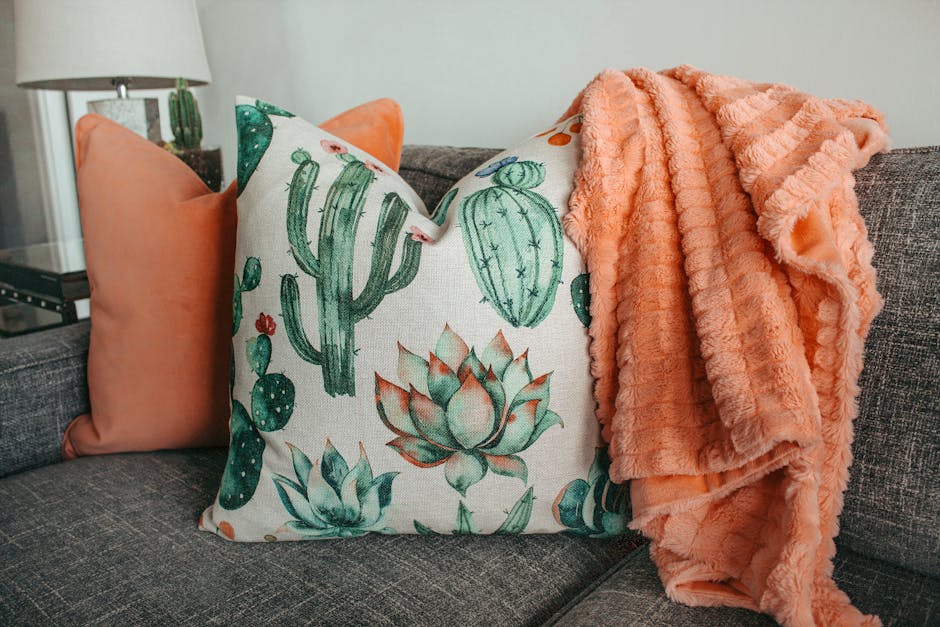
Patterned pillows add visual interest and can tie your entire room together. Scale matters: large sectionals handle bold, oversized patterns; compact loveseats look better with smaller-scale designs (roughly 1/4 to 1/3 the width of your sofa). Pull colors from existing elements (wall art, rug, curtains). When mixing multiple patterned pillows, vary pattern types (geometric with botanical, stripes with abstract) but unify through a consistent 2-3 color story.
Best for: Rooms needing visual interest, those with existing decor anchors (art, rugs) to coordinate with, experienced decorators or those comfortable with pattern risk
Performance fabrics like microsuede or solution-dyed polyester resist stains and fading, making them ideal for homes with pets, children, or high-traffic seating. They're more forgiving than natural fibers and easier to maintain long-term, though they lack the tactile richness of linen or velvet.
Best for: Busy households, pet owners, anyone prioritizing durability over aesthetic luxury
Pros & Cons
Pros
✓ Linen provides natural texture and breathability; velvet adds luxury; solid colors offer versatility; patterned pillows create visual interest and tie room elements together
✓ Quality inserts (down alternative or poly-fill) prevent flattening and lumping, extending pillow lifespan across all fabric types
✓ The 60-30-10 design rule and color coordination principles work across all options, ensuring pillows complement rather than compete with existing decor
✓ Performance fabrics offer stain/fade resistance for practical households without sacrificing the foundational design principles
Cons
✗ Linen shows wrinkles easily, requires professional-grade dyes for color fastness, and demands quality inserts to perform well—budget linen often disappoints
✗ Velvet requires maintenance, can show footprints and dust, and isn't ideal for high-traffic seating areas; patterned pillows risk dating quickly or clashing if color story isn't carefully planned
Our Verdict
Pick solid-color pillows if you want a safe, timeless refresh: They work with nearly any decor and require no color coordination risk. Pair them with quality fabric (linen for formal rooms, performance fabric for high-traffic homes).
Choose patterned pillows if you have existing strong decor anchors: Pull 2-3 colors from your rug, wall art, or curtains, then find patterns incorporating those hues. This works beautifully but demands more planning.
Invest in velvet only for formal, lower-traffic spaces: The luxury look is real, but maintenance and wear concerns make it risky for everyday living rooms. Jewel tones justify the splurge better than neutrals (which perform fine in cheaper fabrics).
Prioritize fabric weight and insert quality over brand: A $40 performance-fabric pillow with a quality insert will outlast a $60 budget-linen option with cheap filling. Medium-to-heavyweight linen (200+ TPI), dense velvet (300+ gsm), and sturdy backing matter far more than brand prestige. The actual construction determines whether your pillows look intentional or lumpy in six months.
Frequently Asked Questions
What thread count should I look for in linen throw pillows?
Aim for 200+ threads per inch for durability that holds up to regular use. This density helps resist pilling and maintains shape better than lightweight linen, which can feel flimsy on a sofa.
How should I mix patterned and solid throw pillows together?
Use the 60-30-10 rule: one dominant pattern, one or two complementary supporting patterns, unified through 2-3 consistent colors. Vary pattern types (geometric with botanical, stripes with abstract) to avoid visual chaos while keeping the color story tight.
Is velvet practical for homes with pets or kids?
Velvet is not ideal for high-traffic households. While 300+ gsm density resists pilling better, velvet shows footprints, dust, and stains more easily than performance fabrics or tightly-woven linen. Consider performance fabrics instead for busy homes.
What's the difference between down alternative and poly-fill inserts?
Down alternative and poly-fill blends both prevent lumping and flattening when quality-made. The key is density: firmer inserts maintain pillow structure and look more sculpted; looser fills feel softer but flatten faster with regular use.
How do I choose colors for throw pillows with a neutral sofa?
Gray or beige sofas pair beautifully with warm neutrals (cream, taupe, soft gray) for cohesion, or deeper jewel tones (emerald, navy, sapphire) for sophisticated contrast. Pull accent colors from nearby elements like your rug, wall art, or curtains to ensure intentional coordination.
Our team curates stylish, well-reviewed home decor and interior products so you don't have to. Every recommendation is based on real research: customer reviews, expert opinions, and value for money. Learn more about us →
This post contains affiliate links. We may earn a commission if you purchase through our links at no extra cost to you.