By Best Home Decor Picks Daily • July 24, 2026 • Contains affiliate links
Affiliate Disclosure: As an Amazon Associate, we earn from qualifying purchases. Clicking our links costs you nothing extra and helps us keep reviewing products for free.
Open concept living spaces demand a different approach to rug selection than traditional single-room layouts. A single rug needs to anchor multiple functional zones—kitchen, dining, living—while maintaining visual flow and cohesion across the entire area. But "the right rug" isn't one-size-fits-all. Your best choice depends on whether you prioritize size and visual grounding, durability and easy maintenance, a specific color palette, or the ability to define traffic patterns.
Measure your open concept space's distinct zones and choose a large area rug that anchors the living area while leaving at least 18 inches of flooring visible around its edges, which visually separates the space without creating a cramped feeling. Opt for neutral, washable materials like polypropylene or wool blends in beige, gray, or soft taupe that hide traffic stains and complement evolving decor styles across multiple rooms.
This guide compares four distinct rug strategies for open concept homes: large area rugs that anchor entire zones, runner rugs that guide traffic and define pathways, washable synthetic options for high-traffic durability, and neutral-tone pieces that create design flexibility. Each approach solves different problems and works better for different households.
Large Area Rugs (8x10 or 9x12 feet)
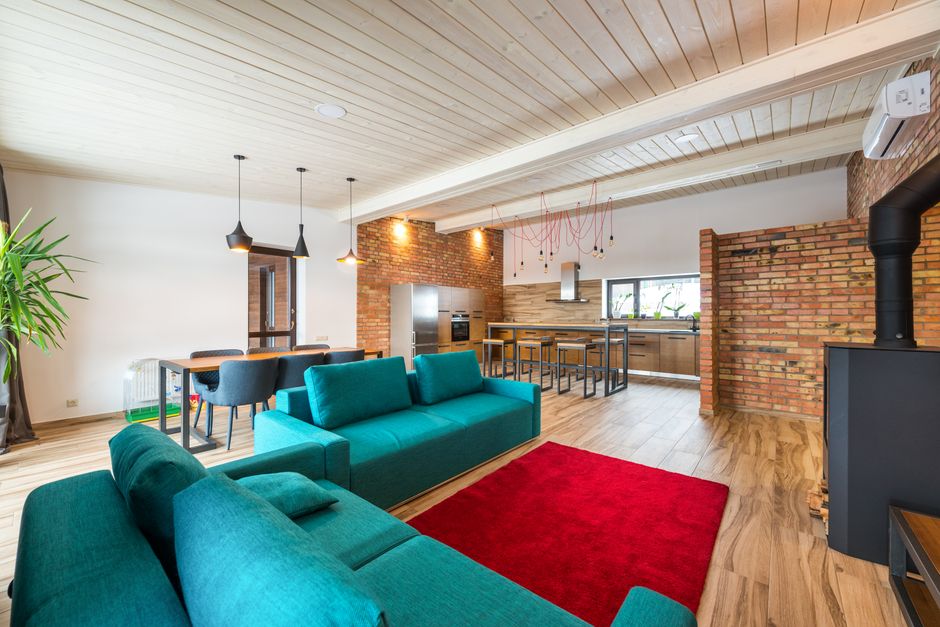
Large area rugs create a defined "living room" zone by grounding your primary seating with enough coverage that at least the front legs of your sofa sit on the rug. For open concept spaces, an 8x10 or 9x12 foot rug anchors without physically blocking sightlines or creating visual clutter when viewed from adjacent kitchen or dining areas. This strategy treats the rug as a visual anchor that ties your seating cluster together while keeping the overall space feeling open and flowing.
Large area rugs work best when you want clear zone definition but maintain an unobstructed view across your entire open layout. They provide substantial visual impact and make the living area feel intentional and cocooned without the heaviness of dividing walls.
Best for: Homeowners who want clear visual zones and a cocooned seating area; homes with defined furniture clusters within open layouts; spaces where the kitchen and dining area are physically separated from the living zone
Runner Rugs
Runners narrow the focus and guide traffic patterns through open concept spaces, working well between kitchen and living areas or along transition zones. Unlike large area rugs that anchor a single zone, runners create linear visual pathways that help the eye flow naturally across different functional areas. They're particularly effective for defining movement patterns without the bulk or visual weight of a large rectangular piece. Runner materials can be chosen for stain resistance, making them practical for kitchen-adjacent placement.
Runners excel at creating subtle zone breaks and guiding foot traffic while maintaining the openness of your layout. They work as a complementary piece rather than a dominant anchor, making them ideal for narrower open concept designs or homes where the kitchen, dining, and living areas blend more fluidly.
Best for: Open layouts with linear flow between functional areas; homes with high foot traffic between kitchen and living spaces; narrow or gallery-like open concept designs; secondary rug solutions paired with other pieces
Washable rugs prioritize durability and practical maintenance over traditional aesthetics. These pieces typically use polypropylene, polyester blends, or solution-dyed nylon with tight weaves that resist matting and trap less debris than natural fibers. They can tolerate spills, pet accidents, and constant foot traffic from multiple zones without requiring professional cleaning. Most are machine-washable or can be hosed down, making them genuinely low-maintenance in high-traffic open concept areas.
This approach trades some warmth and luxe texture for peace of mind. Washable rugs let you decorate boldly and use your space freely without anxiety about stains or wear patterns. They're the practical choice for active households, homes with pets or young children, or anyone who prioritizes usability over pristine appearance.
Best for: Families with young children or pets; high-traffic households where spills are inevitable; anyone prioritizing easy maintenance over luxury texture; rental properties or frequently-used living areas
Neutral-Tone Rugs with Subtle Texture Variation
Rather than flat, one-dimensional color, quality neutral rugs use tonal variations—warm beiges with cream undertones, soft grays with charcoal flecks—that add visual interest while maintaining a neutral foundation. This texture gives the space depth and prevents the rug from feeling like a blank canvas. Neutral tones (cream, gray, beige, warm taupe) complement multiple décor zones and work seamlessly across kitchen cabinetry, living room furniture, and dining accents without clashing when viewed from different angles in an open layout.
Neutral-tone rugs function as design anchors that create cohesion without imposing a strong color statement. They allow flexibility in furnishings and accessories, making them ideal for evolving decor or homes where multiple adjoining spaces have different color schemes.
Best for: Design-conscious homeowners who want a blank canvas for accessories; homes with varied décor across functional zones; anyone planning to change accent colors or furnishings frequently; spaces where visual continuity matters more than bold statement pieces
Combination Approach (Multiple Smaller Rugs or Layering)
Rather than choosing one strategy, some open concept layouts benefit from combining approaches: a large neutral area rug anchors the living zone while a washable runner defines the kitchen-to-dining transition, or multiple smaller pieces layer different functions. This allows you to prioritize durability in high-traffic zones, maintain visual flow with neutral tones in the seating area, and use stain-resistant materials where spills are likely (kitchen edges). The trade-off is added visual complexity and the cost of purchasing multiple pieces.
Combination approaches work when different zones have genuinely different needs—a pristine seating area adjacent to a heavily-used kitchen, or a space large enough to support multiple distinct visual zones without feeling cluttered.
Best for: Larger open concept spaces with distinct functional zones; households where different areas have different durability needs; homeowners willing to invest in a coordinated rug strategy; spaces where one solution would be a compromise
Pros & Cons
Pros
✓ Large area rugs create visual anchors that make open spaces feel intentional and cocooned rather than vast and impersonal
✓ Washable synthetic rugs eliminate anxiety about spills and stains in high-traffic zones, enabling truly lived-in décor
✓ Runner rugs guide traffic patterns and create subtle zone breaks without the visual weight or cost of large area pieces
✓ Neutral tones with subtle texture variation provide design flexibility while adding depth and preventing a flat, one-dimensional appearance
Cons
✗ Large area rugs are a significant investment and difficult to replace if the color scheme or layout changes; they also require careful sizing to avoid dividing the space visually
✗ Washable synthetic rugs often lack the luxury feel and warmth of natural fibers; they can feel plastic-y and don't age as beautifully as wool
Our Verdict
The best rug choice for your open concept space depends on what problem you're solving. If visual zone definition and a cocooned seating area are priorities, a large 8x10 or 9x12 neutral-tone rug with subtle texture variation is the strongest standalone choice—it anchors your living area while maintaining design cohesion across the open layout. If durability and maintenance are your primary concerns, particularly with children or pets, a washable synthetic rug in polypropylene or solution-dyed nylon is the pragmatic winner, even if it sacrifices some luxury feel. Runner rugs excel as secondary pieces or in layouts with linear traffic flow between kitchen and living areas, working best alongside (not instead of) a larger anchor piece. For design flexibility and evolving décor, neutral tones consistently outperform bold colors in open concept spaces because they won't clash when viewed from multiple adjacent functional areas. Consider your household's actual priorities—is this about long-term design cohesion, surviving daily life with high traffic, or guiding movement through the space? Most large, well-used open concept homes benefit from a hybrid approach: a durable, washable runner in high-traffic kitchen zones paired with a neutral, textured large area rug in the living seating cluster.
Frequently Asked Questions
What size rug should I choose for an open concept living space?
For large area rugs, aim for 8x10 or 9x12 feet with at least the front legs of your sofa on the rug. This anchors the seating zone without making the entire open space feel divided. For runners, standard dimensions are 2.5' to 3' wide by 8' to 12' long, depending on the pathway you're defining. If you're combining pieces, size each separately based on its function—the large rug anchors, the runner defines a specific traffic zone.
Should I choose a textured or flat neutral rug for open concept living?
Choose textured. Flat, one-dimensional neutral colors can actually make large open spaces feel smaller and more boring. Look for rugs with tonal variations—warm beiges with cream undertones, or soft grays with charcoal flecks—that add visual interest and depth while maintaining the neutral foundation. Subtle texture prevents your rug from feeling like a blank canvas and creates a more sophisticated, intentional look.
Which rug materials are best for high-traffic open concept areas?
For durability in high-traffic zones, polypropylene, polyester blends, and solution-dyed nylon are superior to natural fibers. These materials have tight weaves, resist matting, resist staining, and are genuinely washable—a significant advantage in kitchens and high-traffic transitions. If you want the luxury feel of natural fibers, use them in lower-traffic seating areas and reserve washable synthetics for kitchen and transition zones.
Can I use a dark-colored rug in an open concept space or will it make the area feel smaller?
Dark colors in large, open layouts can feel heavy, but they work if used strategically. A dark neutral (charcoal gray, deep taupe) anchors the living seating zone without making the entire open concept feel cramped, as long as the overall rug size isn't oversized and the surrounding areas remain visually open. Test the rug in place before committing. Light to medium neutrals are generally safer for making open spaces feel expansive.
Should I use one large rug or multiple rugs in an open concept space?
One large, well-sized rug is typically the strongest visual solution for cohesion. However, larger open concept homes (800+ sq ft) or spaces where the kitchen and living areas have genuinely different functional demands can benefit from a combination: a large neutral anchor rug in the living zone plus a washable runner in the kitchen-dining transition. Multiple rugs work better when they're intentional and coordinated, not scattered randomly.
How do I prevent washable rugs from sliding on open concept living room floors?
Use a non-slip rug pad underneath. This is especially important in high-traffic open layouts where constant foot traffic between zones can shift an unpadded rug. Non-slip pads protect both the rug and your flooring, provide cushioning, and keep the piece in place even with significant foot traffic.
Will a runner rug make my open concept space feel choppy or broken up?
Not if sized and placed correctly. Runners work best as subtle guides rather than bold visual breaks. Choose a runner in neutral tones that complement your overall palette, and position it to define traffic flow (kitchen-to-living transition) rather than trying to divide the entire space. A runner should feel like a natural movement pattern, not a visual barrier.
Our team curates stylish, well-reviewed home decor and interior products so you don't have to. Every recommendation is based on real research: customer reviews, expert opinions, and value for money. Learn more about us →
This post contains affiliate links. We may earn a commission if you purchase through our links at no extra cost to you.