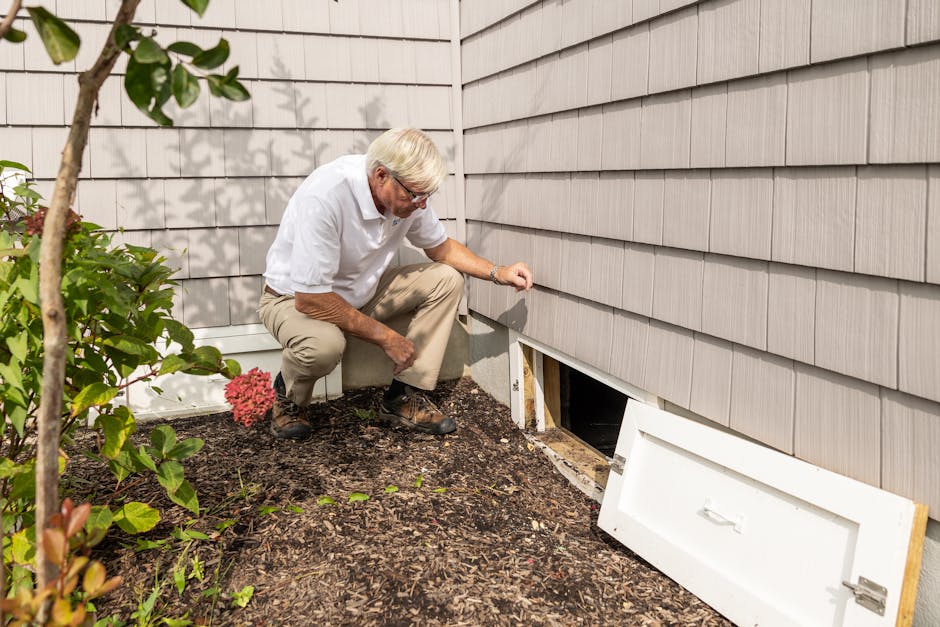
Photo: Kathleen Austin Kuhn / Pexels
Your crawl space is the hardest-working, least-visited part of your home. It sits directly on soil, breathes in damp outside air, and quietly feeds moisture upward into your living space through stack effect airflow. When relative humidity in that dark, unventilated zone climbs above 60%, you get the familiar consequences: musty odors in the hallway, cupping hardwood floors, insulation that sags off the joists, and wood framing that becomes an open invitation to mold and wood-destroying insects.
A portable room unit from a big-box store won't solve this. Crawl spaces demand purpose-built equipment: low-temperature operation, corrosion-resistant coils, gravity or pump-assisted drainage, and enough airflow to actually circulate air through a long, low, obstacle-filled cavity. That's exactly the category Argendon builds for, with a lineup spanning residential basement units through heavy-duty commercial dehumidifiers.
When evaluating How to Choose a Crawl Space Dehumidifier: Sizing, CFM, and Installation Guide (2026), the key factors to consider are build quality, long-term durability, and whether it genuinely solves the problem it claims to address.
This guide from besthomedecorpicksdaily.com walks you through pints-per-day sizing, why CFM matters more than most buyers realize, ducting strategy, drainage options, and a realistic installation checklist so your unit performs the way the spec sheet promises.
Dehumidifier capacity is rated in pints of moisture removed per 24 hours, and crawl spaces punish undersized equipment. A rough starting point: budget 40–50 pints/day for a dry, encapsulated crawl space up to 1,500 sq ft; 70–90 pints/day for a 1,500–2,500 sq ft space with a vapor barrier but some air leakage; and 100+ pints/day for large, vented, or chronically wet crawl spaces with exposed soil or a history of standing water. Then adjust for reality: add roughly 20% capacity if the space is unencapsulated, another 10–15% if you're in a humid coastal or Southeast climate, and more if there's a sump pit or French drain constantly evaporating water. Also check how the unit is rated. AHAM ratings taken at 65°F/60% RH reflect actual crawl space conditions far better than saturation ratings at 80°F/60% RH, which inflate numbers. Argendon publishes performance at realistic low-temperature conditions, which makes cross-model comparison far more honest than guessing from a single headline number.
Capacity tells you how much water a unit can pull; CFM (cubic feet per minute) tells you whether it can actually reach the moisture. A crawl space is a flat, cluttered maze of piers, ducts, and joists, and a high-capacity unit with weak airflow will simply dry a bubble around itself while the far corner stays at 75% RH. The goal is roughly one full air change every 20–30 minutes. Multiply length × width × average height to get cubic feet, then divide by 25 to get a target CFM. A 1,800 sq ft crawl space with 3 ft of clearance is 5,400 cu ft, which points to about 215 CFM. Most quality crawl space units land in the 150–400 CFM range, and higher CFM models also support ducting. Argendon's crawl space and commercial dehumidifiers offer ducted supply and return collars so you can push dry air to a remote corner and pull damp air back — the difference between a unit that works on paper and one that works in your house.
Every crawl space dehumidifier produces gallons of condensate daily, so plan drainage first. Gravity drain to a sump pit, exterior daylight, or floor drain is the most reliable option because there's no pump to fail — just maintain continuous downhill slope and avoid low spots that trap water and freeze. If gravity isn't possible, use a condensate pump with a safety float switch that shuts the unit down before an overflow. Hang or elevate the unit on a stand or joist-mounted brackets so it never sits in standing water and so its intake pulls from mid-height air rather than the cold layer at the vapor barrier. Place it centrally, discharge toward the farthest corner, and keep at least 12–18 inches of clearance around intakes. In vented crawl spaces, seal the vents and install a class I vapor barrier over the soil first — running a dehumidifier in an open, vented crawl space is like air conditioning your yard.
Crawl spaces run cold, and cheap dehumidifiers frost over and shut down below 60°F. Argendon builds around the features that matter down there: hot-gas or auto-defrost systems for reliable low-temperature operation, corrosion-resistant coil coatings for damp environments, MERV-rated filtration to protect the coil from soil dust, and digital humidistats that hold a setpoint (target 45–55% RH) instead of cycling wildly. Because the brand covers residential basement dehumidifiers through commercial-grade humidity control, you can size a single vendor solution across a whole property — crawl space, basement, garage, or storage building — and keep parts, filters, and controls consistent. For most homeowners that means a mid-capacity ducted unit; for contractors and property managers, the commercial line handles multi-unit buildings and restoration work. Browse the full Argendon range here to match capacity and CFM to your measurements.
If your crawl space smells musty, your floors are cupping, or a hygrometer down there reads above 60%, a portable room unit is a waste of money — you need equipment engineered for cold, dirty, low-clearance environments. Measure your cubic footage, target one air change every 20–30 minutes, size capacity to your climate and encapsulation status, and insist on low-temperature defrost plus a reliable drainage plan. Argendon is our recommendation for most homeowners and contractors because it delivers crawl-space-specific engineering, ducting flexibility, and honest performance data across both residential and commercial capacities. Check current Argendon crawl space dehumidifier models and pricing here.
Aim for 45–55% relative humidity. Below 60% you stop mold growth and discourage wood-destroying insects; going below about 40% wastes energy and can over-dry wood framing. Set the humidistat to 50% as a reliable default and verify with a separate hygrometer placed in the farthest corner from the unit.
For an encapsulated 1,500 sq ft crawl space with a sealed vapor barrier, 50–70 pints/day is typically sufficient. If the space is unencapsulated, has exposed soil, sits in a humid Southeast or coastal climate, or has a sump pit, step up to 70–90 pints/day. Always compare units rated at 65°F/60% RH rather than saturation conditions.
You don't strictly need full encapsulation, but you should at minimum lay a class I vapor barrier over exposed soil and seal foundation vents. Running a dehumidifier in an open, vented crawl space means constantly drying incoming outdoor air, which drives up energy bills and may never reach your target humidity.
Yes — and you should if your crawl space is long, L-shaped, or divided by piers and foundation walls. Choose a model with supply and return collars, keep duct runs short and smooth, and discharge toward the dampest, most remote area so return air pulls moisture back across the whole space.
Found this helpful? Share it!
Our team curates stylish, well-reviewed home decor and interior products so you don't have to. Every recommendation is based on real research: customer reviews, expert opinions, and value for money. Learn more about us →
This post contains affiliate links. We may earn a commission if you purchase through our links at no extra cost to you.
← Back to Best Home Decor Picks Daily| Retailer | Price Range | Shipping | Link |
|---|---|---|---|
| Amazon | Check Current Price | Free (Prime) | View on Amazon → |
| Walmart | Check Site | Free over $35 | Search → |
| Target | Check Site | Free over $35 | Search → |
Prices may vary. Click through to each retailer for current pricing.