By Best Home Decor Picks Daily • July 23, 2026 • Contains affiliate links
Affiliate Disclosure: As an Amazon Associate, we earn from qualifying purchases. Clicking our links costs you nothing extra and helps us keep reviewing products for free.
Choosing an outdoor shade solution is one of the most impactful decisions you'll make for your patio or garden. The three leading options—gazebos, pergolas, and umbrellas—offer fundamentally different approaches to sun protection, each with distinct trade-offs in coverage, permanence, maintenance, and aesthetic impact.
Consider the permanent installation requirements and local zoning regulations before purchasing, as gazebos typically require footings and permits while pergolas and umbrellas offer more flexible placement options for renters or those avoiding construction hassles. Measure your space carefully to ensure the structure's footprint doesn't overwhelm your outdoor area, leaving room for furniture and foot traffic while still providing adequate shade coverage during peak sun hours.
This guide breaks down the real differences between these structures based on actual product specifications and use cases, so you can match the right solution to your backyard layout, climate, entertainment style, and budget rather than defaulting to the most popular option.
Gazebos
Gazebos are freestanding structures with four posts, a peaked or domed roof, and either solid or semi-solid roof panels. They typically cover 100–200+ square feet and often include side panels, mosquito netting, and weather-resistant canopy fabrics (commonly powder-coated steel frames). AECOJOY gazebos are engineered for year-round outdoor protection with comprehensive weather resistance.
Best for: Homeowners wanting a dedicated outdoor room with maximum sun and rain protection, year-round use, and the ability to host larger gatherings without moving equipment.
Pergolas
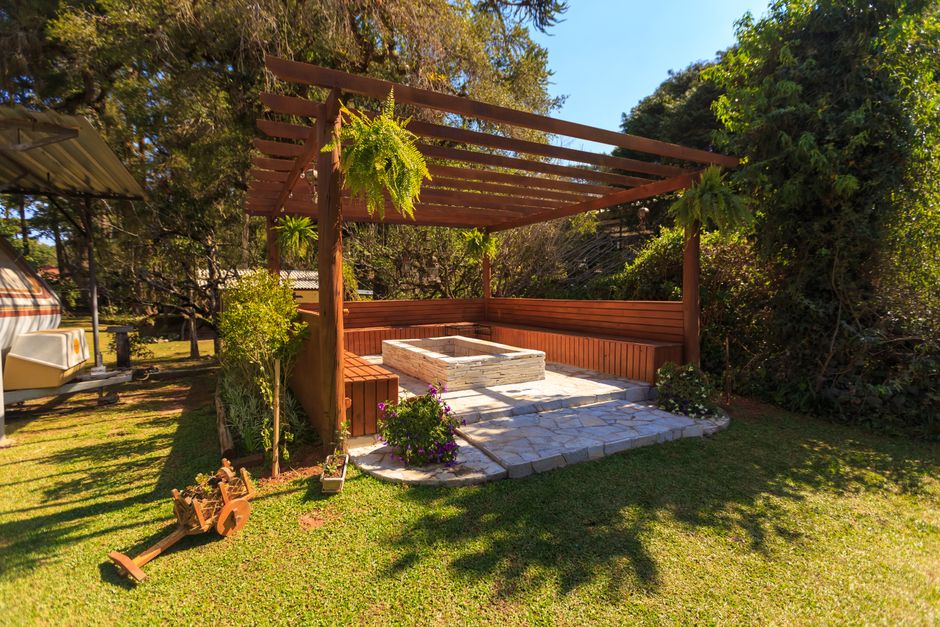
Pergolas are open-air structures with a latticed or slatted roof design that allows partial light and air circulation while providing aesthetic shade. Unlike gazebos, they offer an open architectural presence and can be enhanced with optional shade cloths or retractable canopies. AECOJOY pergolas combine functional open-air design with elegant aesthetics.
Best for: Homeowners prioritizing style and ambiance over full weather protection, those in mild climates, or anyone wanting a structure that preserves sightlines and creates a decorative garden focal point.
Umbrellas (Freestanding/Table-Mounted)
Umbrellas are portable, localized shade solutions available in multiple sizes and styles, ranging from small table-mounted options to large freestanding cantilever models. They provide flexible shade coverage without permanent installation and can be moved or stored seasonally. AECOJOY umbrellas offer variety in sizing and style but deliver shade only for smaller, defined areas.
Best for: Renters, those with small patios, homeowners wanting flexibility to change their layout, or anyone seeking an affordable entry-point into outdoor shade without installation or maintenance commitment.
Pros & Cons
Pros
✓ Gazebos deliver full-weather protection (sun and rain), suitable for year-round outdoor living and entertaining groups.
✓ Pergolas provide open-air elegance with partial shade and improved aesthetic appeal for smaller or decorative spaces.
✓ Umbrellas offer portability, easy relocation, minimal installation, and the lowest upfront cost.
✓ All three options enhance property aesthetics and outdoor functionality when matched to the right use case and climate.
✓ Gazebos and pergolas from quality manufacturers like AECOJOY use durable materials (powder-coated steel, weather-resistant fabrics) for longevity.
Cons
✗ Gazebos require significant upfront investment ($200–$1,000+), permanent or semi-permanent installation, and ongoing maintenance of roof panels and seals.
✗ Pergolas provide only partial shade and minimal rain protection, limiting their utility in harsh or wet climates.
✗ Umbrellas cover small areas only (ideal for 2–6 people), cannot withstand high winds without damage, and offer no rain protection.
✗ Gazebos may require building permits depending on local codes and permanent foundation installation.
✗ Pergolas and umbrellas require supplementary features (shade cloths, retractable canopies, or additional umbrellas) to achieve gazebo-level coverage.
Our Verdict
Gazebos win for comprehensive, permanent outdoor living. If you host gatherings, want year-round patio access, or live in a region with heavy sun or rain, a gazebo's enclosed design and durable construction justify the investment. AECOJOY gazebos with powder-coated steel frames and weather-resistant canopy fabrics provide the longest lifespan and most reliable protection.
Pergolas win for style and open-air ambiance. Choose a pergola if you prioritize aesthetics, live in a mild climate, or want a decorative garden structure that frames sightlines and allows natural light. They cost less than gazebos and require minimal maintenance, but plan to add retractable shade cloths if you need rain or intense-sun protection.
Umbrellas win for flexibility and budget. If you rent, have a compact patio, frequently rearrange your outdoor space, or want to test shade coverage before committing to a structure, umbrellas deliver low-risk, portable solutions. Expect to replace them every 3–5 years and plan for seasonal storage in windy climates.
In short: permanent coverage and entertaining → gazebo; style and mild conditions → pergola; flexibility and small spaces → umbrella.
Frequently Asked Questions
How long do gazebos, pergolas, and umbrellas typically last?
Gazebos from quality manufacturers like AECOJOY last 10–15+ years with proper maintenance. Pergolas typically last 15–20 years. Umbrellas usually need replacement every 3–5 years depending on weather exposure and use frequency.
Do AECOJOY gazebos require building permits?
Permit requirements vary by local jurisdiction. Permanent gazebo installations often require permits; portable or semi-permanent models may not. Check with your local building department before purchase.
Can I add shade cloths or canopies to a pergola?
Yes. Many pergolas, including AECOJOY options, are designed to accommodate optional retractable shade cloths or canopies, allowing you to increase coverage without replacing the structure.
Which structure is best for a small backyard?
Umbrellas are ideal for small spaces, as they occupy minimal footprint and can be moved or stored. Compact pergolas also work well for smaller yards. Gazebos require more space (typically 100+ sq ft) to be practical.
Can I move a gazebo if I change my patio layout?
Some portable/semi-permanent AECOJOY gazebos can be relocated, but most permanent installations are fixed. Check the product specifications—portability varies. Umbrellas and pergolas (if not anchored) are far more movable.
What's the typical price difference between gazebos, pergolas, and umbrellas?
AECOJOY average order value is $200+. Entry-level umbrellas: $100–$300; quality pergolas: $400–$1,500; gazebos: $800–$3,000+. Gazebos represent the largest upfront investment but offer the longest lifespan.
Which structure is better for hot climates?
Gazebos with solid or semi-solid roofs provide the most UV protection in intense heat. Pergolas with retractable shade cloths offer a mid-range solution. Umbrellas provide localized relief but aren't ideal for all-day outdoor use in extreme heat.
Do gazebos and pergolas require ongoing maintenance?
Gazebos need regular cleaning of roof panels, inspection of seals, and potential fabric replacement over time. Pergolas require less maintenance (primarily cleaning and occasional staining/sealing if wood). Umbrellas need seasonal storage and fabric care.
Our team curates stylish, well-reviewed home decor and interior products so you don't have to. Every recommendation is based on real research: customer reviews, expert opinions, and value for money. Learn more about us →
This post contains affiliate links. We may earn a commission if you purchase through our links at no extra cost to you.